
Learn which chatbot integrations create real value, what data should move between systems and what to automate first.

Businesses searching for AI chatbot integrations usually already know the technology exists. The practical question is how to use it without adding risk or unnecessary work. This guide organises the decisions that matter before you buy or launch.
Why this decision matters
An integration is useful when it removes a manual step or gives the visitor a better answer. Connecting every system at once increases risk and testing effort. Start with the handoff that currently causes the most delay or lost information.
What to check before you decide
CRM for lead details and ownership
calendar for available appointments and booking
email or helpdesk for summaries and follow-up
ecommerce for current products, stock and order guidance
During a demo, do not only check whether the assistant can talk about CRM for lead details and ownership. Ask how that answer is updated, who receives the outcome and what happens when the conversation reaches ecommerce for current products, stock and order guidance. This shifts the evaluation from a polished demonstration to daily operation.
A practical example
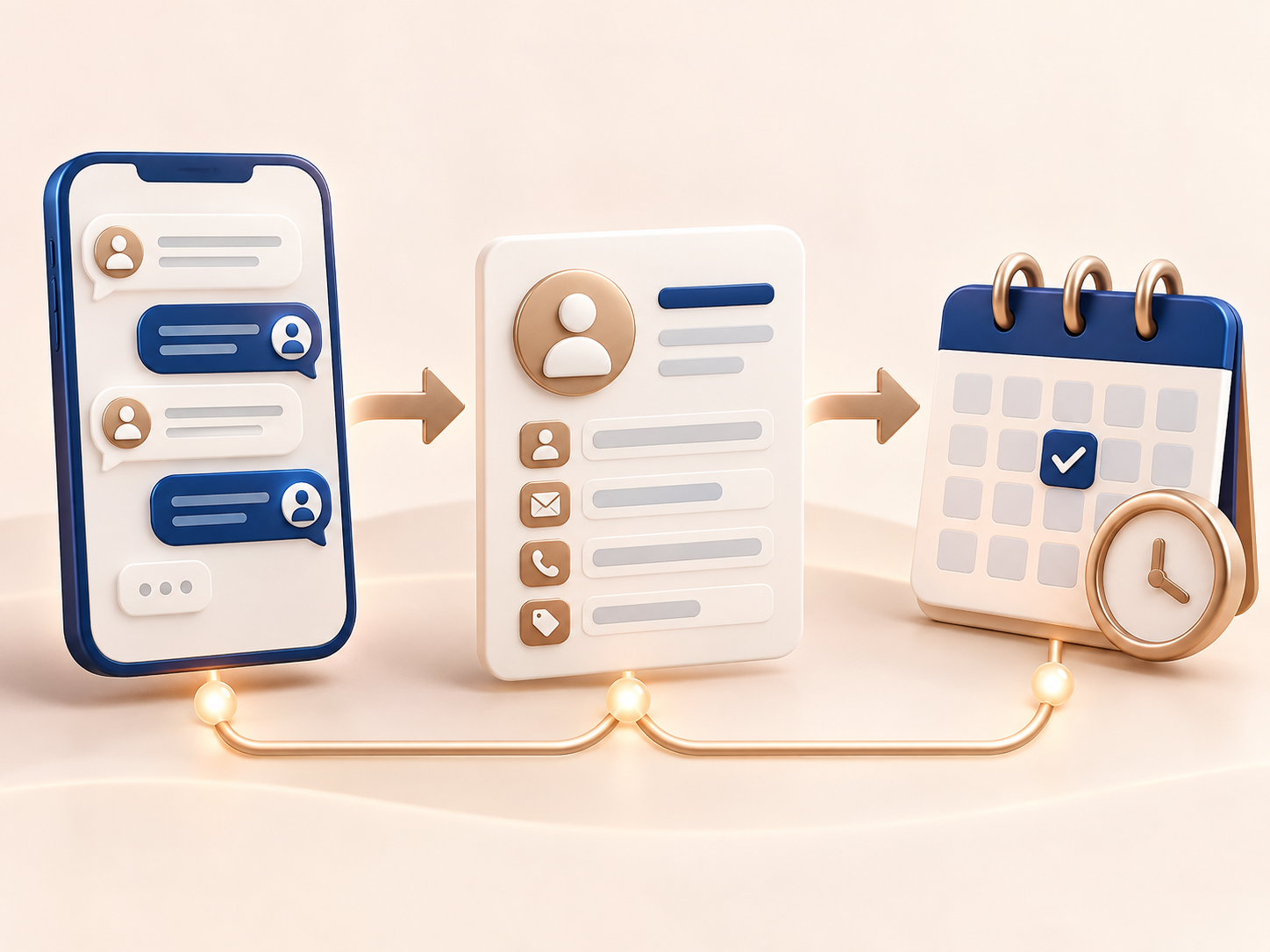
A qualified lead can arrive in the CRM with service interest, timing, budget range and conversation summary. The salesperson starts with context instead of asking the visitor to repeat everything.
The useful pattern is progressive assistance. The assistant provides value first, then asks only for information needed for the next step. This can produce a shorter conversation, a clearer customer journey and a more useful handoff for the team.
How to get started
Map the current manual handoff.
Define the minimum fields and the source of truth.
Test failures, duplicates and permissions before wider rollout.
A common mistake is giving the first version too many jobs. When the goal, source and owner are unclear, it becomes difficult to tell whether weak results come from the technology or the process. A narrow, measurable launch produces reliable learning sooner.
What to measure in the first month
Measure minutes saved per handoff, missing-field rate, duplicate records and the time until a teammate acts. Integration success is operational: the right information reaches the right place reliably.
Want to see how this works in practice? Try our live Enéh demos: https://eneh.hu/demos.
See it working
Seven industry demo sites, each with a trained Enéh assistant on it — ask them anything.
Browse the demosKeep reading

Best AI Chatbot for a Small Business: 12 Questions to Ask Before You Buy
Use these twelve buyer questions to compare website chatbots by accuracy, setup, integrations, support and measurable business value.

How to Add an AI Chatbot to Your Website: A Practical Launch Guide
Plan, train, install and test a website AI chatbot with a focused launch process that avoids weeks of unnecessary work.

Chatbot vs Contact Form: Which One Generates More Qualified Leads?
See when a conversational chatbot converts better than a contact form and how to use both without adding friction.

AI Chatbot vs Live Chat: Which One Should Your Website Use?
A practical comparison of AI chatbot and live chat for response speed, complex questions, staffing, cost and customer experience.