
Turn website pages, PDFs and FAQs into a reliable chatbot knowledge base with clear ownership and update rules.

Businesses searching for train AI chatbot on website usually already know the technology exists. The practical question is how to use it without adding risk or unnecessary work. This guide organises the decisions that matter before you buy or launch.
Why this decision matters
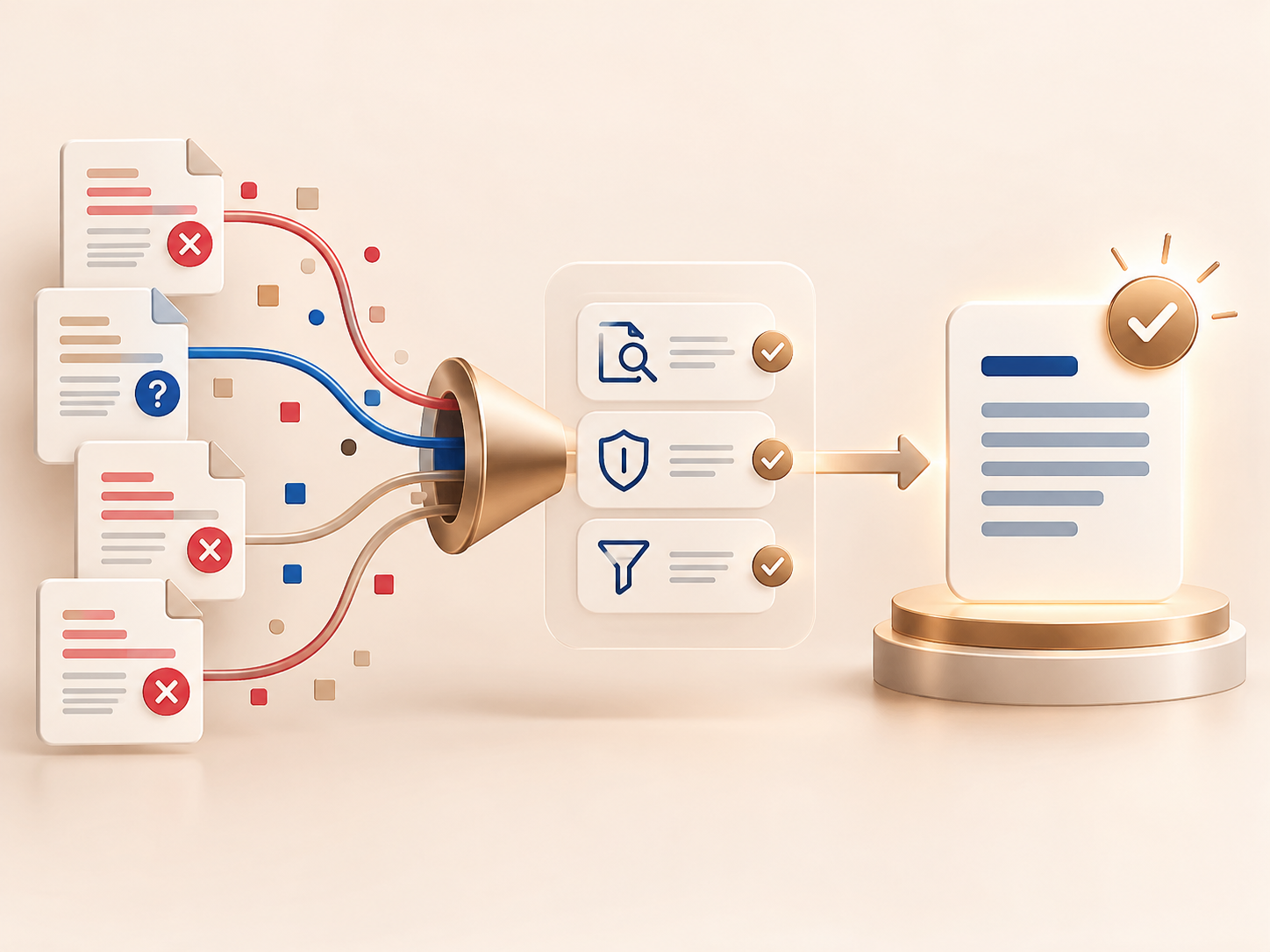
An assistant cannot fix conflicting prices, expired documents or vague service descriptions. Good training starts by selecting authoritative sources and removing contradictions before anything is uploaded.
What to check before you decide
approved pages and documents with named owners
clear headings, short answers and explicit conditions
dates or review intervals for changing information
test questions that include ambiguity and missing answers
During a demo, do not only check whether the assistant can talk about approved pages and documents with named owners. Ask how that answer is updated, who receives the outcome and what happens when the conversation reaches test questions that include ambiguity and missing answers. This shifts the evaluation from a polished demonstration to daily operation.
A practical example
If three pages describe delivery differently, choose one policy page as the source of truth and update the others. The chatbot should cite or link that page and decline to invent an exception.
The useful pattern is progressive assistance. The assistant provides value first, then asks only for information needed for the next step. This can produce a shorter conversation, a clearer customer journey and a more useful handoff for the team.
How to get started
Inventory the content customers actually need.
Resolve contradictions and assign owners.
Test with real phrasing, then review unanswered questions weekly.
A common mistake is giving the first version too many jobs. When the goal, source and owner are unclear, it becomes difficult to tell whether weak results come from the technology or the process. A narrow, measurable launch produces reliable learning sooner.
What to measure in the first month
Track supported-answer rate, source freshness, unanswered topics and corrections requested by staff. The goal is a smaller, trusted knowledge base that stays current, rather than a large pile of files.
Want to see how this works in practice? Try our live Enéh demos: https://eneh.hu/demos.
See it working
Seven industry demo sites, each with a trained Enéh assistant on it — ask them anything.
Browse the demosKeep reading

AI Chatbot Integrations: CRM, Calendar, Email and Ecommerce Explained
Learn which chatbot integrations create real value, what data should move between systems and what to automate first.

Best AI Chatbot for a Small Business: 12 Questions to Ask Before You Buy
Use these twelve buyer questions to compare website chatbots by accuracy, setup, integrations, support and measurable business value.

How to Add an AI Chatbot to Your Website: A Practical Launch Guide
Plan, train, install and test a website AI chatbot with a focused launch process that avoids weeks of unnecessary work.

Chatbot vs Contact Form: Which One Generates More Qualified Leads?
See when a conversational chatbot converts better than a contact form and how to use both without adding friction.